In Brazil, almost no one remembers the Principessa Mafalda. In Argentina, 25 October has a name: it is Naval Conscript Day, the Día del Conscripto Naval. The day was established fifty years ago, and it remembers one of the ship’s passengers, Anacleto Bernardi, a 21-year-old who was on board almost by chance.
A comment from Argentina, after our piece on the 99th anniversary, reminded us: “Here in Argentina we remember it, very much.” There is a town that bears his name, where a vigil is held on the night of 24 to 25 October.
Who he was
Anacleto Bernardi was born on 13 July 1906 in San Gustavo, in the province of Entre Ríos. In January 1927 he joined the Argentine Navy for his military service and was chosen for the crew of the frigate Presidente Sarmiento, the training ship, on that year’s training cruise. On the way he fell ill with a lung disease. With the frigate moored in Genoa, the Navy decided to send him home on a passenger liner, and with him went the chief gunner’s mate Juan Santororo, in charge of looking after him.
The liner was the Principessa Mafalda. On the list of those on board, both are in second class: “Bernardi, Anacleto (21), Argentine”, among the dead, and “Santororo, Juan”, among the survivors.
The night
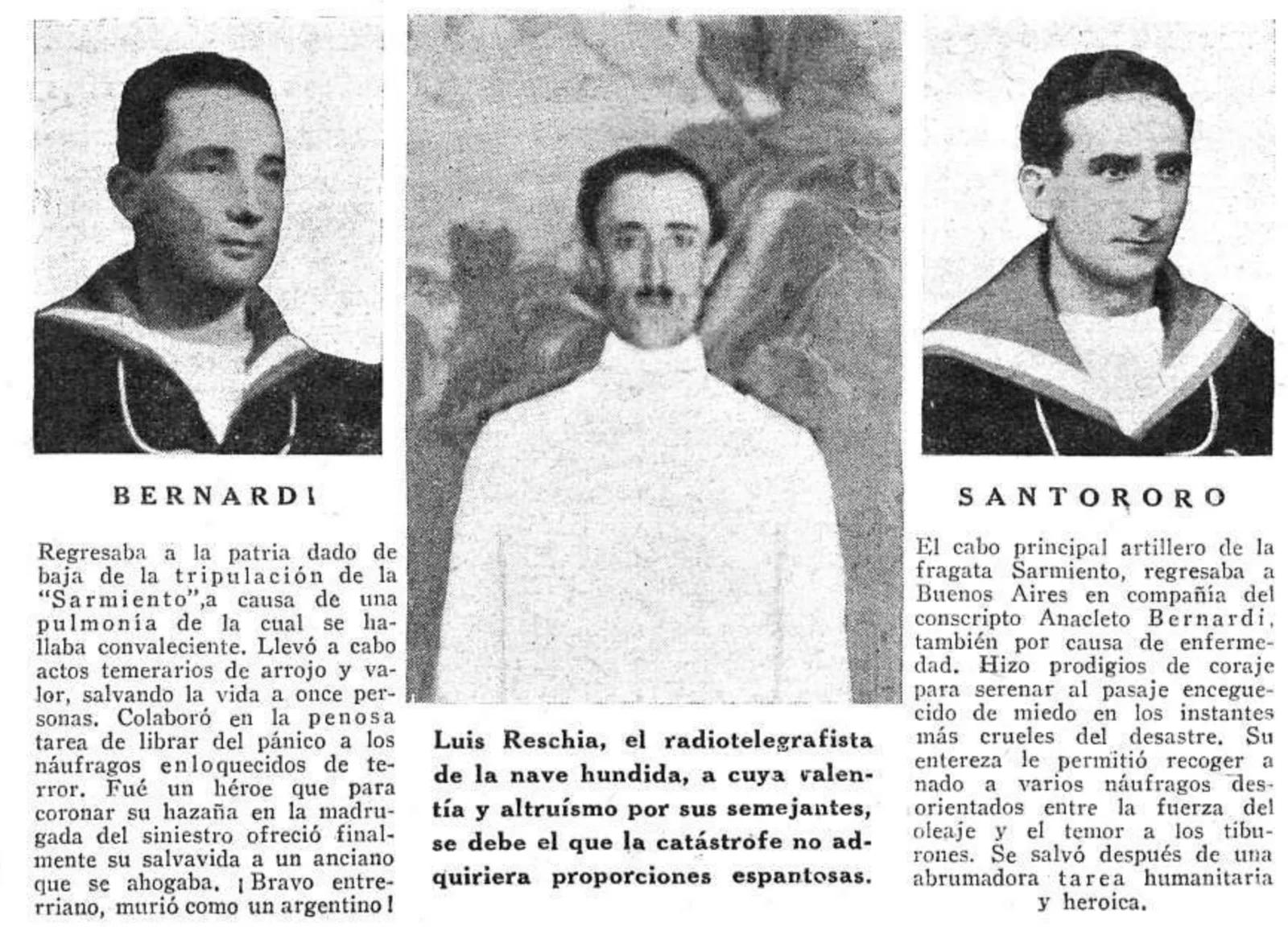
Caras y Caretas, in Buenos Aires, printed the two portraits with a few lines underneath. Of Bernardi: “He was returning home, discharged from the crew of the Sarmiento because of pneumonia, from which he was recovering. He carried out reckless acts of daring and courage, saving the lives of eleven people. He helped in the painful task of freeing from panic the castaways maddened by terror. He was a hero who, to crown his deeds, in the early hours of the disaster finally gave his life jacket to an old man who was drowning.” And it ended: “¡Bravo entrerriano, murió como un argentino!” (Brave son of Entre Ríos, he died like an Argentine!)
Of Santororo, the magazine says he “worked wonders of courage to calm the passengers blinded by fear” and swam to pick up several castaways lost among the waves, until he was saved himself, “after an overwhelming, humane and heroic task”.
In Rio de Janeiro, the magazine O Malho found Santororo among the survivors and called him “a true hero”. It wrote that he had saved “eleven or more people”, and that he showed the reporters the identity card of another sailor, also Argentine, “who to the very last moment busied himself saving the lives of others, and who nonetheless could not save his own”. The magazine does not give his name.
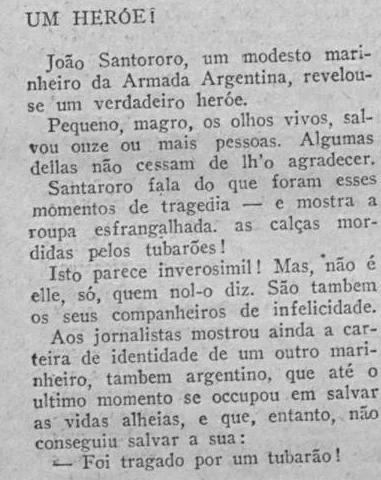
The two magazines give the same “eleven” saved, one to Bernardi, the other to Santororo. That is how the stories of that night have reached us: told by those who were there, by reporters who heard them on the quay, sometimes mixed together. What they all say is the same: the two sailors, who could have looked after themselves alone, spent the night helping others, and one of them did not come back.
According to the Argentine Navy, on the way back from the training cruise the Sarmiento stopped at the place of the sinking, and her commander ordered military honours for the conscript who had come from her crew.
The memory
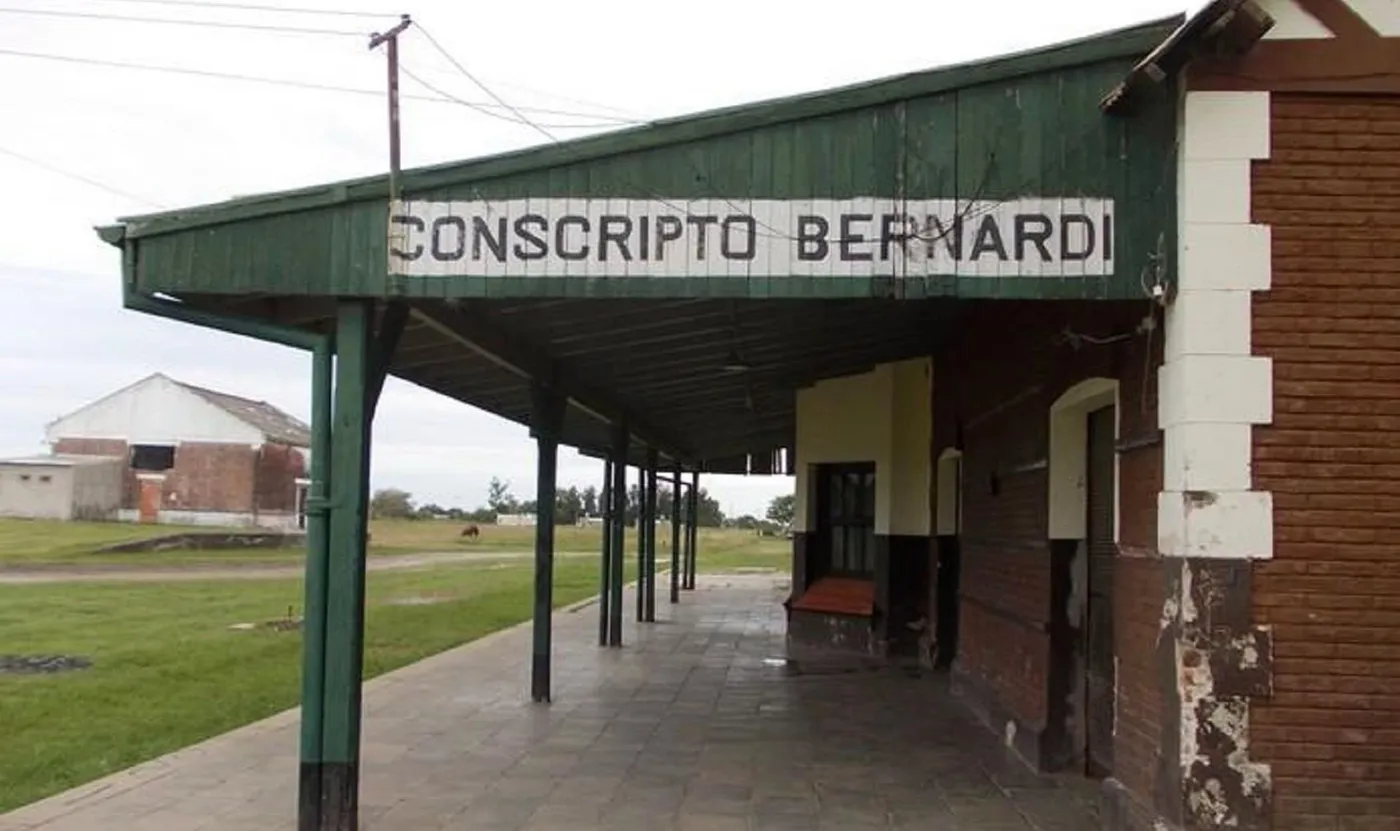
In Argentina, Bernardi’s name has stayed. The railway station and the town of Conscripto Bernardi, in Entre Ríos, bear his name. In San Gustavo, where he was born, and at Navy bases there are plaques, busts and monuments, and every 25 October there are ceremonies in his memory.
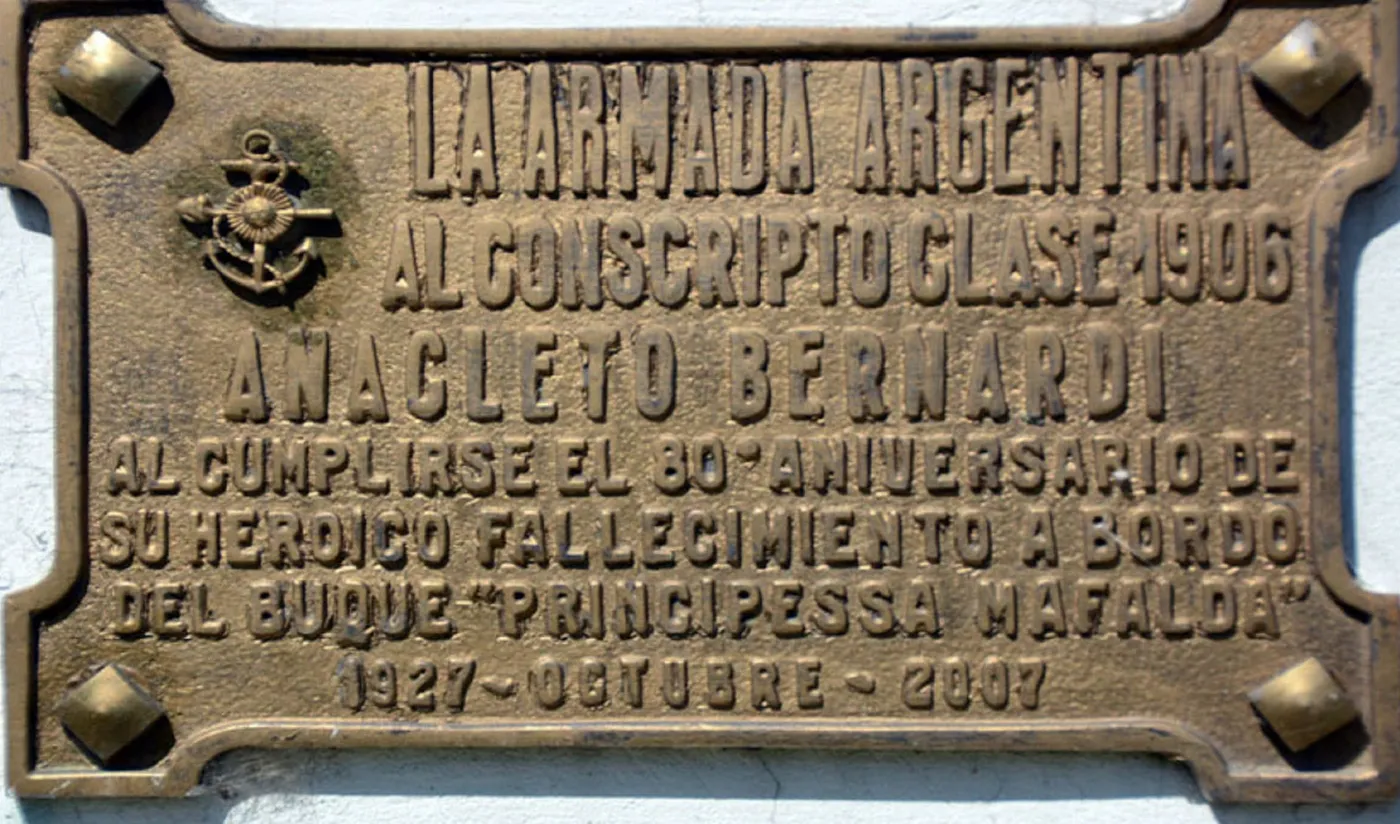
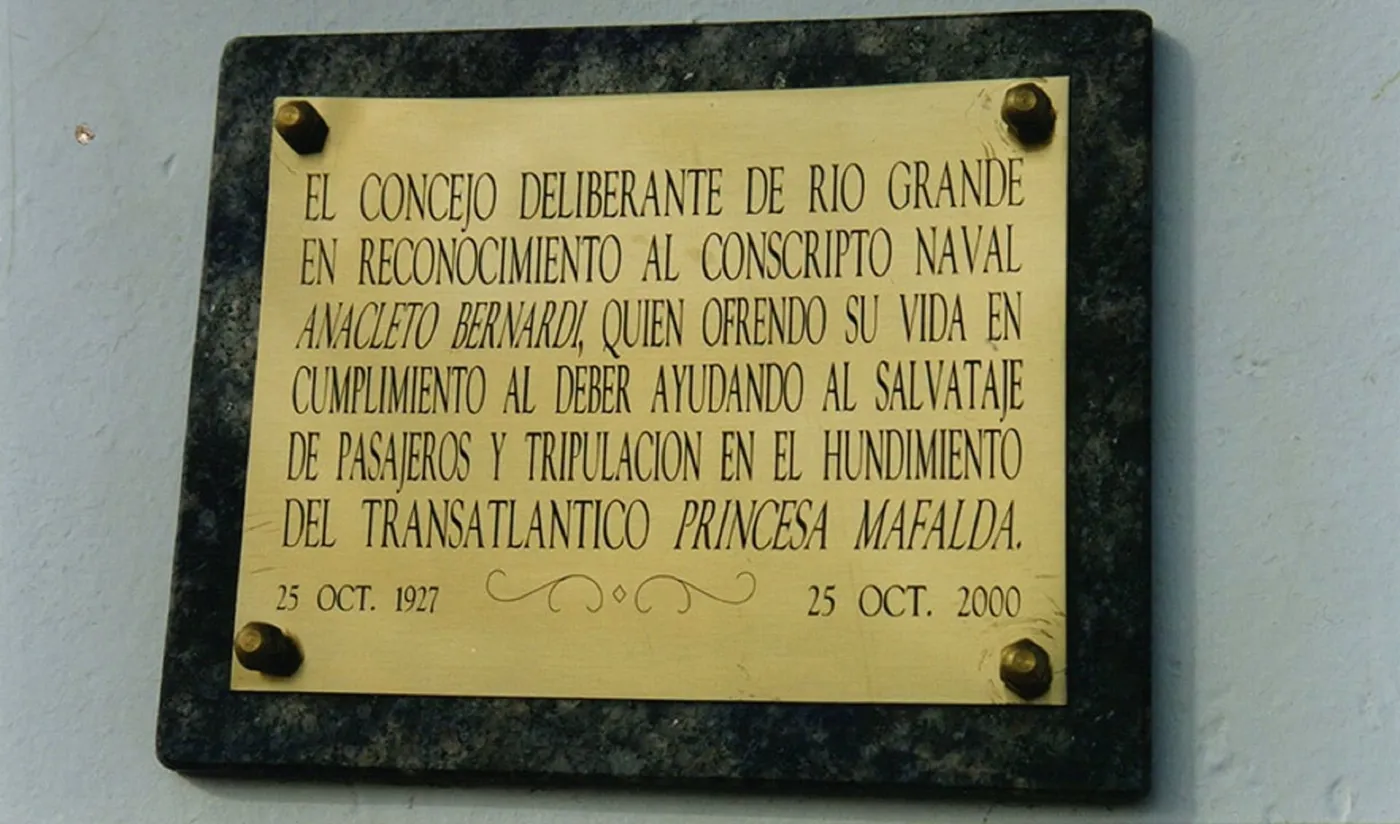
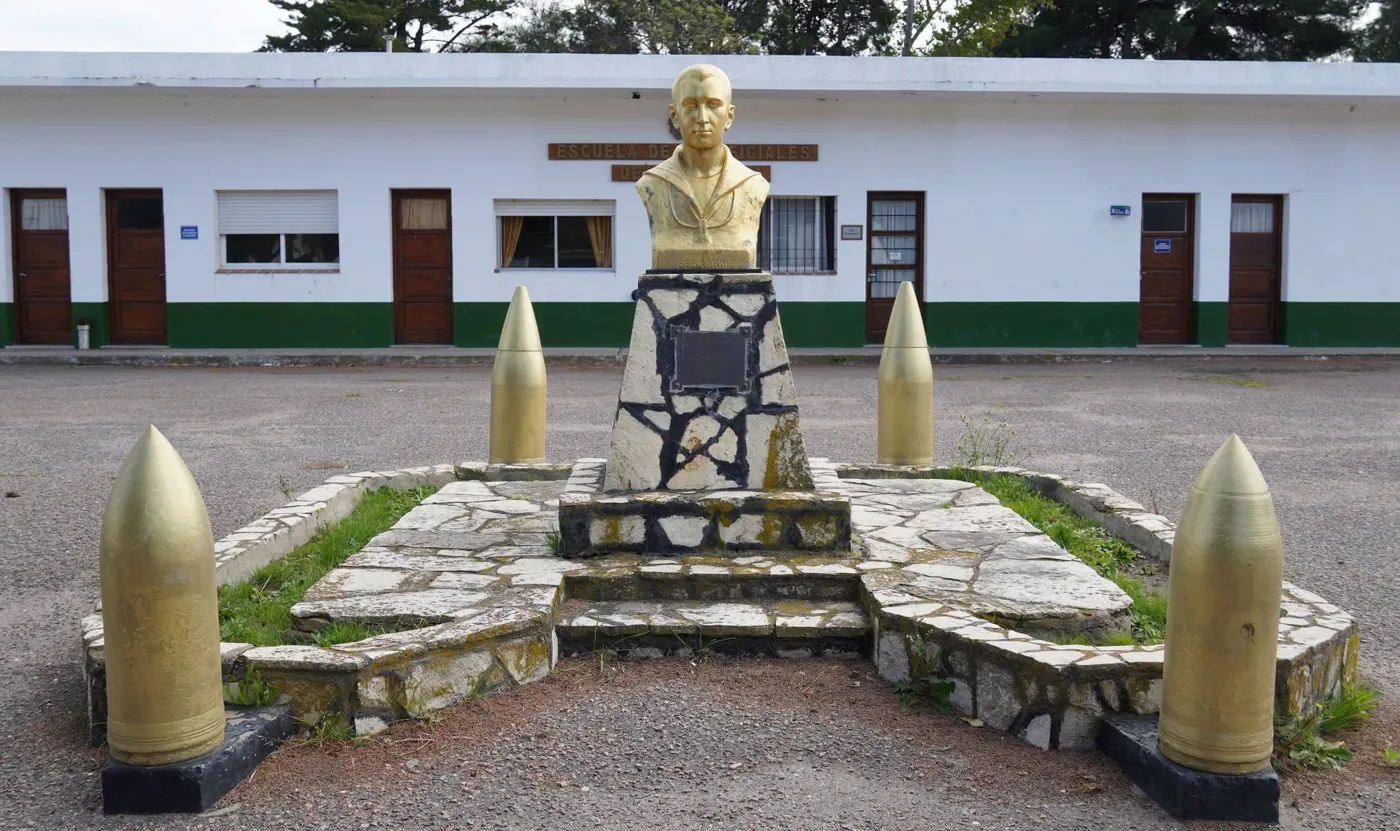
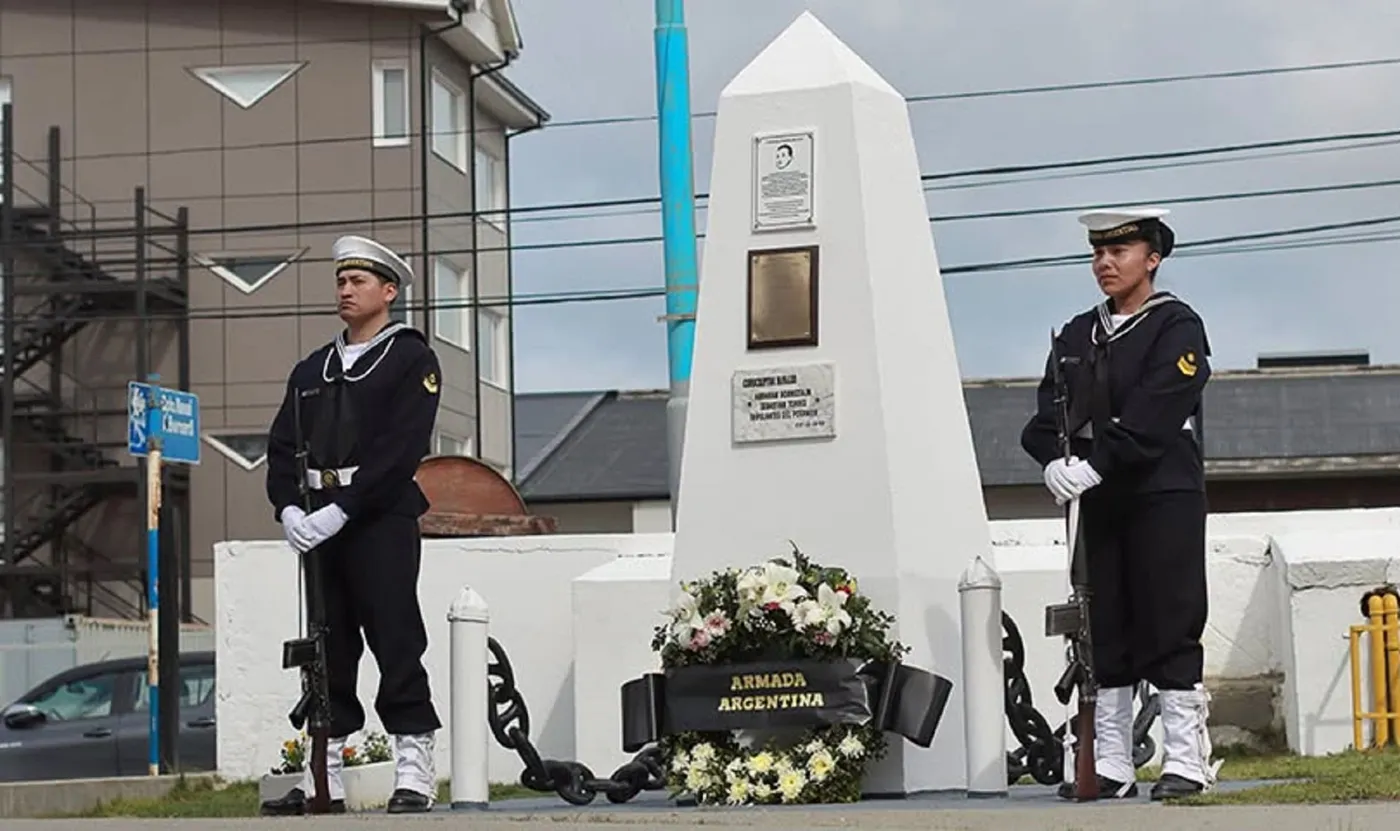
In 2026, fifty years after the day was established, the Argentine Navy remembered Bernardi as a symbol of all the young men who did their military service. For anyone researching the Principessa Mafalda, he is something else too: one of the 314 who died that night, a sick young man on his way home, whose name a whole country has not forgotten.
His name is on the site’s memorial, with the others, in The shipwreck.